an office of one’s own

I was sour all this week. Logically, I knew it was because it’s January and there’s nothing good about January, especially not in this year of our lord 2020 when the next ten months are going to be an even more arduous slog toward inevitable disappointment than usual. Emotionally, I decided to blame it on “hot-desking,” a lesser-known scourge of work in the age of lifehacking wherein one isn’t assigned a desk but is instead invited to share a “pod” with their teammates. To me, this is a nightmare on par with weddings without seating charts, and I yearn for my past life as a dancer when barre spots weren’t assigned, per se, de jure, but God help you if you stood at the spot furthest from the mirrors on the barre nearest the courtyard because everyone knew that was my spot.

I was also sour because I’ve been trying to read more twentieth-century classics and so I’m gnashing my teeth through Lucky Jim, by Kingsley Amis. It’s a sendup of postwar England in which the hapless protagonist suffers, among other indignities, the hysterics of his would-be ex-girlfriend upon trying to dump her. Actual hysterics. Screaming, sobbing, frothing at the mouth until someone slaps her in the face. I’m too humorless and militant a misandrist to abide tired stereotypes, even in the context of satire.

To be fair, I was predisposed to dislike Kingsley Amis, the second husband of Elizabeth Jane Howard, my favorite literary discovery in 2019. She wrote the popular Cazalet Chronicles, five volumes of family saga that span pre- to postwar England, among other well-reviewed novels, but during her marriage to Kingsley her career took a backseat to his because that’s what was done then, and so I hate him out of allegiance to “Jane.” Sorry, Kingsley. (Besides, who the fuck names their kid Kingsley? Honestly. Brits.)

At the beginning of 2016 I decided to spend the year reading only books by authors who weren’t straight white men. It was a terrific experiment that took on unexpected poignance that November (I watched the election returns in front of a literal shrine to women leaders in history that my friend built for us to celebrate in front of, in case you were somehow confused about where my loyalties lay) and one that’s stuck with me, in terms of both the books I select now and my view on books I’ve read in the past. In my early twenties I read a lot of Philip Roth and John Updike and I couldn’t figure out why I felt so dejected every time I finished an American Pastoral or Rabbit, Run.

I obviously appreciate erudite writing that captures a time and place indelibly, and I love to read about socially unacceptable human foibles, but it’s only been in recent years — after immersing myself in voices from the margins, and in the era of #MeToo — that I’ve realized that I just don’t really like misogyny as a literary technique. God help me if I have to wade through another gratuitous description of the hysterical wife of a put-upon man chafing at the bonds of corporate servitude and his milquetoast children. Give me Eileen and her constipation any day.

I didn’t have the energy to deal with hot-desking this week, so instead of a desk I sat at a countertop between the video games and the pool table (recall that I work in Silicon Valley, where employment contracts are Faustian bargains, though it turns out the eternal youth gets old once you hit thirty). Fortunately, I joined the London location of The Wing in November, where I can leave behind the animal screams of post-adolescent coders taking breaks from “deep work” to hear women dressed in the millennial British uniform of that Zara dress over Chelsea boots under a boxy pastel car coat use the phrase “side hustle” in a sentence.

I felt especially grateful for The Wing during a week that felt spectacularly male with Kingsley Amis prattling on about the unbearable lightness of women who don’t follow recommendations on what lipstick to pair with your pallid skin tone and the only Bernie bro I know tweeting prolifically. It feels extravagant to pay for a coworking space when I already have a home and an office, but I have to spend the rest of 2020 and also, probably, my life catching up on the great misogynists of twentieth-century literature and being governed by the great misogynists of twenty-first-century politics and riding the Tube to work underneath male armpits. If shelling out an arm and a leg to sit underneath an oil portrait of Phoebe Waller-Bridge gets me through paying taxes to two governments led by men who have single-handedly inspired white women to rage-knit more performatively than ever, then it’s money well spent.

try the grey stuff; it’s delicious

I lived with four of my best friends when we were seniors in college. Our chore strategy was that we lived in filth until someone got fed up and rage-cleaned, and then they got to passive-aggressively sulk everyone else for the rest of the week as a reward. Once we decided to clean up the kitchen together, which was great until one of us (not me) opened one of the drawers in the refrigerator to find that the celery one of us (me) had left in there weeks — months? — ago had turned black and liquified. Science, right?!

I think about that every time I find celery in one of the drawers in my refrigerator, which happens days — weeks? (months?!) — after every time I buy celery, because there are no recipes that call for more than a couple stalks of celery, and no grocery stores that sell celery by the stalk. It’s a scam.

I always think, oh, yeah, I’ll eat some celery with peanut butter, finish it off, but honestly, that feels like the kind of weird snack I would have passed off as a treat when I was anorexic, practically high off the fat in the peanut butter while I zealously picked celery strings out of my teeth. In the objectionable corners of the Internet where teenagers trade tips on how to starve yourself, celery is one of those vaunted foods that’s fabled to have net-zero calories because it’s so hard to eat. (Nota bene: These forums are not hotbeds of scientific insight.)

Anyway, there’s celery in my fridge that I need to attend to, but a few days ago I gave my fiancé and myself both food poisoning, and the experience of scraping the offending lentil curry into the garbage disposal a mere day after having spent several hours vomiting it and my stomach lining up was so traumatic that I’m not sure I can open the fridge again yet. Or maybe ever. (Who has two thumbs and is washing the spinach twice next time?! Not this guy, because I’m only ordering takeout for the rest of time!)

Much like emerging from the fog of migraine to discover that you still have arms and feet, there’s something refreshing about the end of a bout of food poisoning. Except when you, say, eat a bunch of grapes in your office kitchen and it’s all you can do to not double over in front of a bunch of hairy boy-children talking about, I don’t know, databases, because the gremlin that’s still living in your stomach does not want grapes, it only wants buttered toast.

Speaking of grapes, and anorexia snacks, I was tickled to read the New York Times’s latest militant screed about sugar. Among the gems were instructions to avoid grapes and bananas, and to replace your morning orange juice with — wait for it! — ice water, but with an orange slice in it. Also, at one point I think they suggested that instead of eating a bowl of oatmeal, you could “savor a whole orange”? It was unclear to me what you should do if you don’t like oranges. Could a person gain the same keen sense of dissatisfaction with their very existence by replacing their morning apple juice with a glass of ice water with a slice of apple in it?

The lady at the New York Times who hates grapes and oatmeal and orange juice would definitely have been one of those ladies who eyeballed me in my building elevator and asked me what I was doing to stay so svelte. Nothing burns calories like berating yourself for not climbing up thirteen flights of stairs, ladies!

All of this is to say that part of me wants to see how long I can let that celery sit in the refrigerator drawer until someone else deals with it, but part of me recognizes that having given my only cohabitant food poisoning recently, I should probably do him a solid and throw that celery out myself if I still want him to marry me.

P.S. I was about to hit Publish when my fiancé walked in and started taking out the trash, and I said “Hey, could you take that celery out of the fridge, too?” I AM THE MASTER OF MY FATE; I AM THE CAPTAIN OF MY SOUL!

someone else’s mom’s minivan

I’m on winter holiday break from work until Monday, so yesterday I went to look at dinosaurs at the Natural History Museum with an old friend who also lives in London. I realized as early as the Tube ride there that it was a mistake; the Piccadilly line was crawling with children and I spent the eight stops between Kings Cross/St Pancras and South Kensington watching a toddler in a princess dress, flannel leggings, and Keds methodically unwrap and eat every one of a tin of foil-wrapped chocolates. It was wild.

My friend and I waded through a waist-high sea of humanity to see the blue whale and the animatronic T-rex and then we made a beeline for the V&A to look at the Cast Courts — which you think is a room of famous sculpture until you realize it’s a room of plaster models of famous sculptures — and what must be every piece of silver service manufactured in the seventeenth century.

I had been to the V&A once before, when I saw an exhibit about underwear (I like history best through an extremely specific lens, and old bras are so weird!), but this was the first time I saw the breadth of its collection. As my friend described it, the V&A just has… a lot of stuff. A whole lot of stuff. The plaster models and the silver services, yes, but also entire rooms devoted to miniature portraits and gilded boxes and blingy tiaras from lesser royals.

We got to talking about field trips. I think occasionally about how I miss them. I can’t place why, since there’s nothing especially precious about riding in the back of someone else’s mom’s minivan or eating lunch at Port of Subs. I always wound up sick, anyway, either from the excitement or the warmed-over mayonnaise.

My friend posited that it’s that it was nice to have something fun and exciting to do that you didn’t have to plan yourself. That’s it, and as I think about it that’s mostly what I miss from childhood itself — the fact of not having to plan anything yourself.

I don’t think about childhood often, and I rarely wax nostalgic for it, but the turn of the year always brings me back to that little burst of pleasure I felt preparing the year’s first sheet of college-rule notebook paper, after I wrote my name in the upper right-hand corner (Cass-comma-Dana, last name first to make sorting easier for the overworked teachers of the Clark County School District), when I wrote the new year for the first time. 1/10/00, and in six months I’ll be done with the fifth grade and on the fast track to adulthood; 1/6/03, and in five months I’ll be free from the horrors of middle school; and so on.

As I approached the end of high school — 1/8/07; in eight months I’ll be able to go out drinking whenever I want — it occurred to me that I was beginning to run out of milestones. The year after the year I graduated college was the first year that I had nothing on my calendar. No “finish sixth grade” or “graduate college”; just “trudge inexorably toward oblivion.” I wrote “2012” for the first time, in the logbook at the store where I sold shoes for a dollar above minimum wage, and even though I was buying my own groceries and setting my own bedtime, I didn’t eat ice cream for dinner or sleep until noon. Six- and sixteen-year-old me would have been just horrified if they had been there. 

At thirty I’m in that awkward phase professionally where I have autonomy, but lack the latitude (or maybe the spine) to make decisions. I’m responsible for what I do but hamstrung in terms of doing it any better, so I mostly just walk around feeling guilty for everything that goes wrong and trying to figure out whether to theatrically proclaim it as a failure that I can trot out to demonstrate how reflective I am or pretend nothing happened (or Plan C, throw someone else under the bus).

It have been nice, when I wrote 2020 in my journal on Wednesday for the first time, if I could have followed it with a countdown: Five months until I can sign off on my own budget, three semesters until I can ignore your opinions, by this time in 2024 the Internet will have imploded and I won’t have to monitor Twitter anymore. But it’s another year of the inexorable march.

On the bright side, I got to leave the Natural History Museum of my own volition when I was tired of children flat-tiring my shoes, and I never have to take a math test again.

P.S. In light of the recent news from Iran, may I recommend one of the most insightful and thought-provoking books I’ve read in recent years: the Israeli journalist Ronen Bergman’s Rise and Kill First, about the Israeli government’s use of targeted assassinations. It’s a clear-eyed history of the practice that presents the strategic, moral, and psychological risks and benefits even-handedly. If you’re interested in understanding precedent for this practice and its ramifications in this region in particular, I highly recommend it — definitely a tome but it’s a page-turner. I even gave my dad a copy for Christmas last year. Is that weird?


cleaning up bottles with you on new year’s day

It’s New Year’s and so I’ve been faffing around — we all agree that “faffing around” is the best British-ism, yes? — with New Year’s resolutions. I like to set a resolution or two but inevitably I forget them within weeks, which is fine, since it’s usually something like “Accept more social invitations” that is just not going to happen short of a brain transplant. It’s possible that my New Year’s resolution every year of my adult life has been “Accept more social invitations.”

I was thinking this year that my resolution should be something like “Be more present,” but that’s pretty easy, since I know that if I set my phone to black-and-white mode I magically stop wanting to watch Instagram Stories from my college classmates who are on Broadway now and/or Smitten Kitchen. Voila! Presence. I look forward to a more fulfilling future spent watching my friends and loved ones watch their Instagram Stories.

One could also argue that my resolution should be “Plan a wedding,” but I’m digging this concept my fiancé and I came up with (still funny that I have a fiancé; feels like the kind of thing I should say through a cigarette hanging from the corner of my mouth, wearing shoulder pads) where we rent out an Applebee’s and everyone wears sweatpants. Voila! Wedding. (Just kidding, Mom!)

Anyway, the more important thing is that they say that how you spend New Year’s Day is how you spend the year to come, and it’s nine P.M. and I haven’t left the house, so I think it’s gonna be a good one.

So. New Year’s resolutions. I’ve been feeling conflicted lately about my writing. I’ve had this blog for several years now and the essays I publish have gotten some attention here and there, but I’m beginning to realize that self-publishing on WordPress isn’t the best way to channel my creative energy. I haven’t been especially proud of anything I’ve published in the past couple of years, because I spend weeks to months noodling on genuinely good ideas and then vomit them out in the course of a weekend in a rush to publish to a relatively small audience. I feel stressed when I don’t write and inadequate when I do, with no editor to challenge and improve me and, of course, no remuneration. (Except the one zillion likes I get whenever I mention my eating disorder on Instagram, because everyone loves trauma!)

This is a solvable problem. People get paid for their writing all the time. Even bad writing! I’ve been paid for my writing! (I also had a stint as an SEO blogger for the cottage industry that’s sprung up to sue on behalf of people who had bad run-ins with vaginal mesh, but that’s not really what I’m looking for in a career as a writer.) It’s not as easy as pressing Publish on WordPress, and I’m pathologically lazy, but I’ve made exceptions in the past — twelve years of ballet come to mind — and I think I can figure it out.

At the same time, I love the instant gratification of blogging and social media, and my mission is a writer is to make people feel less alone in what they experience. This blog, and my Instagram, make great tools to achieve that mission, used in parallel as I grind out the novel that I’m finally gaining steam on and develop and pitch essays to real outlets.

I’m not saying my New Year’s resolution is to get paid for my writing, but I like an obvious inflection point, and there’s no time like today to shift this blog’s focus from sporadic, standalone, occasionally saccharine essays to more regular (and maybe more incisive?) meditations on daily life and culture. 

I guess this is a public commitment to leaning into my identity as a writer. I hope that I’ll be posting here more regularly and that eventually, you’ll see the fruits what I’m laboring on in the background in a more refined format. 

This is still the anti-lifestyle blog. Subscribers need not worry that I’ll start pummeling you with details of my workout regimen or photos of me wearing hats on pastel staircases in foreign countries, and friends and loved ones need not worry that I’ll air out their laundry for all the world to see. (Exes should continue to cower in fear.) I’m just excited to practice the art of writing, and to make obvious references to B-sides from lesser Taylor Swift albums, on a more regular basis. 

I hope you like it.

cybernetics for kinesthetics

This is part 4 of an ongoing series about technology. Previously, I justified my love of Instagram, felt nauseous about search engine optimization, and felt violated by targeted ads. You can stay tuned to this blog for more, or wait a few years for my Silicon Valley tell-all, All My Least Favorite People Went to Stanford.

I was troubled immeasurably by John Seabrook’s article about AI that writes

When I think about unpacking writing to its constituent biological processes, or to the rules of grammar and tone that comprise it, I feel nauseous like I do when I think about what’s outside of the universe, or God, or my most profoundly embarrassing moments. 

At best, my writing is Martha Graham’s quickening translated through me into action. Writing, when I do it well, isn’t something I think about; it’s something that I do with my body, as I did in my past life as a dancer. That writing might be something other than an incalculable force is anathema to the confidence that I’ve developed over the past several years since I first came to realize that there was, in fact, a thing that I was good at. 

Writing this essay was an out-of-body experience. I was 25 and absolutely wretched with despair. I was crawling with feelings and memories. I didn’t know where to put my rage and shame, nor did I know how to ask the world to pity me, and then finally I began to feel something bubbling up at the base of my skull, and I put my hands to the keyboard and then there was my heart, articulated. It was the first time I had felt powerful in months. It was the most powerful that I had felt. It was no biological process or series of instructions that a computer could execute; it was unfathomable. It was transcendent. 

In truth, I know that I, a writer, am a machine. I consume the New York Times Morning Briefing and Reddit threads about the misery of the Tube and I listen to my colleagues tell me all the ways in which they would do my job if they were me and I catch sight of a long-gone lover rock-climbing with his new girlfriend on Instagram and I scroll through movie reviews and restaurant reviews and gadget reviews email after email after email after email. What comes out the other end is one sheet from the multiverse, a dispatch from the version of me who crammed onto this morning’s Central Line to White City underneath the armpit of a man listening to a song that I haven’t heard since the long-gone lover played it for me in, for reasons that escape me, a parking lot. 

In the same way that baking is chemistry, and you can’t eyeball the baking powder, so is artistic expression. What I put on paper is the product of the precise number of hours I spent in the thrall of my A.P. English teacher in 2006 and the precise number of times that I’ve reread the first love letter I received as a semi-grown woman and the precise feeling I get when I forget that I’m brushing up against a stranger’s sweat, jostling for a grip as the train rattles from St Pauls to Bank, and remember instead that I live five thousand miles from where I was born. Had Mrs. Hampton retired five years earlier, I could be writing investigative journalism, not prose poems about the normal things I hate

What I create bears the mark of what I’ve consumed. And does that make me any different from a bot recapping the high school baseball season or a Russian troll farm regurgitating Stormfront in a Facebook ad? 

I like to think of myself as exalted. I’m an artist. You can’t teach an algorithm to feel where the commas go in its bones. I’ve never felt that my talent is explicable or that job, to speak bluntly, is at risk of being automated away. I don’t know where to put commas because I memorized Chicago; I know where to put commas because I feel it in my bones. I’ve made a career of putting commas in such a way that the person on the other end can’t help but feel what I’m feeling or buy what I’m selling. It’s a function of my being one with the commas. It’s innate.

But, then, how did I learn to drive? How did I learn to scale the shelves in the stockroom at the store where I worked in high school to restock a cartonful of shoes in the twenty minutes I had left before they stopped paying me whether or not I was done? Speeding down I-15 outside of Las Vegas, through the alien desert with mountains looming high above, is a task that a robot can do, but a joy that only a human can feel. Once, at the store, I fit a woman with half a foot missing for a pair of shoes; I held her damaged foot in my hand and we looked one another in the eye while she told me what she needed to be comfortable. 

It’s precious of me to imagine that being good at something that’s hard to teach makes me immune to the force of technology. I don’t get paid — yet — for the kind of writing that makes me really tick. And the writing I do get paid for can be such a slog that I might envy the robot that could dispassionately listen to the engineer line-editing my copy on the basis of his having once written for his college paper. (Perhaps we could train the robot to also dispassionately flag every time the engineer suggests language that is a little phallic for a technology marketing document. It, being neither a woman nor sentient, might get better results than I.) 

And yet. I write because I think it’s the best thing I have to offer the world, but I also write because it’s the best thing the world has to offer me. I can live with the idea that I might never drive a car again. I can’t live with the idea that one day holding a pen and scratching it on paper or letting my fingers fly along the keyboard might be quaint, that my naked human prose might not pass muster next to the output of a machine that has read more of Proust than I have. (Which is none, as long as I’m offering up naked human prose.) 

I want desperately to make a career of letting people see themselves in what I write and I’m scared to think that I might be up against not just the army of Buzzfeed listicle writers who have bafflingly landed book deals and an industry that only buys knockoffs of Gone Girl, but… robots. Or, more specifically, the decay of attention devoted to good writing. Machines can get the job of imparting information done. You can call it utilitarian, but what’s to say that writing — mine, or anyone’s — is more than that? 

It’s rich to claim that what I exude when I’m feeling productive is unique or valuable. You could, as Seabrook finds, mix up the same ingredients in another pot, and the consumer might be one the wiser. So who am I to imagine or even wish for a stop to the technology that so inexorably marches over what others hold as dear as I do writing? 

roaring twenties

Ten years is a long time. Given that, it’s really shocking I made it through my twenties without being offered cocaine even once. Granted, I was invited to join several book clubs, and that’s a little more my speed (no pun intended) anyway, but still. Unless I crank (no pun intended) up my nightclub attendance in the three days left before I turn thirty, it seems that that ship has sailed. Pick up a coke habit in your thirties and the next thing you know Jay McInerney is writing your life story. Thanks, but no thanks.

I thought of this in reflecting on all that I accomplished in my twenties. The only things that came to mind were debauchery. Not because I’m especially wild — I wasn’t kidding about the book clubs — but because that’s what I thought my twenties were for. Landed a coveted job? Visited the world’s great cities? Contributed regularly to a retirement account? Sure, but what about the time I walked into the house I grew up in at eight in the morning and puked in the kitchen sink? It was the summer after I graduated from college; I was 22 and sleeping in my childhood bedroom in Las Vegas. I woke up every morning to the Moulin Rouge poster I bought in Paris when I was sixteen looming over me. The teenagers next door had a garage band that only knew “Seven Nation Army” and “Smoke on the Water.” They practiced every afternoon.

It was 2011. I had a degree in English and a part-time job selling shoes and sometimes I’d be invited to the Strip or to one of the old casinos downtown where the other patrons mostly looked like if they didn’t have skin cancer yet it was only because they hadn’t checked. We’d play penny slots and tip dollars on the watered-down vodka sodas the cocktail waitresses brought us and eventually we’d end up in the hotel suite someone’s friend’s friend had been comped or, once, in the living room in one of those chi-chi apartment lofts downtown. It was furnished in bachelor-chic with a record player and a cherry-red metal bookshelf or whatever you buy when you don’t actually like books but there were still meth deals going on in the street outside, so we slept on the couch until the sun rose and it was safe to creep to our cars.

I woke with cotton in my mouth and couldn’t stop myself staring at the man standing outside the parking garage where I’d left my Honda who looked uncannily like Santa Claus, had Santa Claus stopped off in Walter White’s trailer on his way back to the North Pole. Then I drove home and threw up in the kitchen sink before I spent eleven hours at the shoe store where I worked getting my fingers trampled by three-year-olds in tap shoes.

A year later I was making a salary and sipping champagne — okay, it was probably Prosecco, but the point is that it wasn’t Arbor Mist, and I wasn’t chugging — at the company holiday party. Sometimes I feel like I cut myself off too early. I loved being 22 and playing at being wild. I was bookish, had always been bookish, and I wanted not to be. I wanted to be carefree. I wanted to be fun. I wanted someone to offer me cocaine! (I have no real interest in doing cocaine. Last year I drank two cups of Swedish coffee before boarding a plane and I spent the whole flight wondering if I should call for the defibrillator. I just wanted someone to look at me and know that I was fun.)

I think I spent my twenties just as I should have: trying on the costumes of people I thought it might be fun to be. Most weren’t. Being thin meant I was moody and my hair fell out and I couldn’t drink at parties. Dating older men meant being criticized for my immaturity. (If I relate only one pearl of wisdom to my younger sisters, let it be that when your 33-year-old boyfriend tries to shame you, a 24-year-old, for being childish, instead of apologizing, consider suggesting that he not date someone nine years his junior. Honestly!) Auditioning for musicals meant… auditioning for musicals. That one lasted for about ten minutes before I realized that while the normal job hunt might be just as much an affront to my dignity, at least I only had to do it once. Going out drinking meant vomiting in the kitchen sink; going out dancing meant getting other people’s sweat in my hair.

I thought it might be fun to be thin and glamorous and to exist on champagne and air and to sleep in the afternoons and dance in the evenings, or maybe to be gritty and hustling, showing up in the casting room and building out my “book,” living in Astoria and hauling down to the Bell House on the G train (and thin. Every fantasy life I live out begins with being thin).

It turns out what I actually want is to sleep eight hours a night, preferably nine. Pretty much above all else. And what that requires is working a nine-to-five that pays enough to fund the occasional cab home from the Bell House because Lord help me if I’m going to lose out on sleep because I waited thirty minutes for the G train. It requires eating enough that I don’t wake up in the middle of the night with my heart beating out of my chest, which in turn requires that I can live without thigh gap. It requires reading quietly in the evenings, not dancing, and drinking tea, not booze. (It turns out that I was born to be bookish.)

I think I did enough this decade to be okay with this. I crammed a lot in. Mostly just scrolling through Twitter, yeah, but also, I rear-ended a cab driver, walked out on a Tinder date who chain-smoked three cigarettes in my face, played Val in “A Chorus Line,” visited New Zealand, saw the original cast of Hamilton, voted for a woman for president, partied at the Bellagio with Australian tourists, climbed an Alp, got harassed on Twitter, got harassed on the street, sort of learned to cook, rode a bicycle through a hailstorm, and did I mention I saw the original cast of Hamilton? I kept busy.

I don’t regret much. I regret rear-ending that cab driver (it was his second accident that week!). I regret not trying to clean the limescale off my shower floor before the week before we moved out. Sometimes I wish I’d pressed on with trying to be an actress. Mostly I’m excited for everything else I’m yet to do. Can you believe I’ve never visited the Grand Canyon? That I don’t know how to use Microsoft Excel? The list of books I haven’t read alone is enough to keep me occupied until I die, may that be far enough into the future that I don’t ascend to heaven without having read Mrs. Dalloway.

I haven’t made any special plans for my thirties. Keep on keeping on, I guess. Every so often I look up and marvel that I’m still working for the company that hired me when I was 22. Taking that job sent me spinning off my axis. I had always cringed at the idea of a desk job; I got lucky with one that has sent me to the corners of the Earth and taught me to be curious and skeptical. I thought I’d be itinerant for longer than I was and I feel faintly jealous of my friends who still are, but there’s more than one way to be itinerant. I expect to spend my thirties as I spent the back half of my twenties: as impetuously and spontaneously as a hyper-anxious stick-in-the-mud can manage. I’ll move again. I’ll travel more. I’ll forget to text my friends that I’m visiting from overseas until I show up and beg them to cancel their plans that evening so we can have dinner. I might start using eye cream, but it’s probably going to be another limescale-in-the-shower situation. I’ll read more books and maybe I’ll write one. I’ll get better at cooking, and I have this vague idea that I’m going to learn to play the piano. Who knows? I have plenty of time.

thirty, hurty, and dying

In two months I’ll turn thirty. On Instagram, my friends are celebrating their own thirtieths with oversized 3-0 balloons and bachelorette-style nights out with sashes, recording lash-batting, foot-popping Boomerangs, with cute hashtags to boot. Meanwhile, I’ve got one foot in the grave and the other in an ergonomic clog.

That’s an exaggeration. I haven’t bought clogs yet. Speaking frankly, though, there are six things very wrong with my life*:

  1. I haven’t been able to move my back properly since January.
  2. I regularly pull a muscle in my butt by walking wrong.
  3. I get a migraine if I so much as look at a third beer.
  4. I get heartburn when I eat anything but raw vegetables…
  5. …but when I eat raw vegetables my jaw gets stuck shut.
  6. There is a Grand Canyon-sized wrinkle in the middle of my forehead.


It’s enough to make a girl go full Gwyneth Paltrow. I scoffed for a long time at the concept of wellness, but you only have to stumble through so many days with a low-grade migraine before you’re ready to stuff precious stones wherever GOOP tells you to.

I jest. (Kind of. Has anyone tried the jade egg thing? Because seriously, Excedrin Migraine isn’t doing a thing for me anymore.) But thirty is weird. We decided recently to extend our stint in Europe and I keep catching myself thinking that by the time we return, we’ll have missed all the fun, as if when everyone has turned thirty-three they’ll have retreated into the suburbs with their babies, never to be seen again. Or that I only have so many glasses of wine left to drink before the migraines fully take over, or that my back is going to grow stiffer and stiffer until they have to carry me out of economy class on a stretcher.

Work doesn’t help. My colleagues who haven’t yet attended their five-year college reunions are always tagging me in Slack channels and Quip documents, channels so ephemeral that they might as well be sky-writing. “If you want me to do something for you,” I want to say, “you need to carve it for me on a stone tablet and hang it around the neck of a carrier pigeon.” But no, I just apologize for the delay, busy week, I have to do thirty minutes of yoga every night if I want to get out of bed the next morning and it’s really eating into the time I would otherwise spend learning how to organize my Quip notifications.

Once, the only time I worried about what my hair looked like was in the morning before I left the house, or when I caught sight of myself in the rearview mirror. (Or when passing a building with reflective windows. Or when I had an especially large spoon. Or any reflective surface at all. Whatever.) Now I spend half my day in meetings saying things like “Not really in sync” or “Can we just table that for now?” or “Can we just table that for now until we’re more in sync?” And although you’d think I couldn’t look myself in the eye when I sound like such a raging douchebag, all I can do in a videoconference is stare at my little self-view in the corner and either admire my dewy visage or gawk in horror at how the gash-like wrinkle in my forehead is increasingly resembling a Harry Potter scar. During particularly contentious meetings, or when someone with a computer science degree starts to correct my grammar, I can literally watch it deepen.

I’m facing down the barrel of living in this body for the rest of my life. When I was nineteen and soft all I needed was a McDonald’s hash brown to buck me up after a night of drinking or twenty minutes with an ice pack to get me back at the barre, pulled muscle and all. I was preoccupied by the immediate concerns of the body: I needed a haircut. I needed to learn to apply foundation properly. My belly didn’t look like the bellies in Women’s Health. My calves were sore. My quads were sore. My clothes were hopeless. Things that I thought, dwelled on, and then immediately forgot; things that resolved themselves or that I resolved myself to. This wrinkle down my forehead? It’s not resolving.

As a dancer I bounced back from one injury after another. A summer of physical therapy here, a Nutcracker season with my shins sheathed in Ace bandages there; it was always traumatic for a day or two (as if a case of shin splints were the only thing that could keep me from a career in ballet) but a month later I’d have forgotten entirely. Now? Stick me in a hotel with a bad mattress for three days and three months later, I still can’t crack my back without a twinge to remind me that the Swiss don’t know how to build a bed properly. I used to think warming up before working out was just for those sad people who can’t touch their toes. That was before I spent eight weeks in physical therapy doing butt lifts! (“Glute bridges.” I’m sorry, Doctor Mike.)

I’ve long awaited the day when I could look back at the body I’ve fought against for so long and think of how grateful I should have been for its agility, its resilience, its lack of Moses-having-parted-the-Red-Sea-down-the-middle-of-my-forehead, blah blah, etc., etc. That day hasn’t come. I have some time yet.

That’s what terrifies me the most. “The rest of my life” is an awfully long time to live with knees that twinge when you jog, with an esophagus that will let you know when you’ve eaten one French fry too many, with blood vessels that slacken and send the alcohol straight to my brain to slosh around and throb for days on end. It’s an awfully long time to live regardless, in a world that’s getting steadily worse or at least whose worseness is getting steadily louder. I can’t say the phrase “self-care” aloud without cringing at myself but I can understand it. I do yoga; I drink tea; I take vitamins.

It’s easier to look at aging as a matter of the body. The body is not ephemeral. The body endures. Its component parts can live on after death; even scientists with scalpels will leave behind something that needs to be incinerated; even ashes need to be scattered. Last week I read a New Yorker article about a paleontologist shaving away silt in North Dakota to discover fish, frozen in amber with its jaws — gills — outstretched, gasping madly, at the moment it and the dinosaurs died:

“The block told the story of the impact in microcosm. ‘It was a very bad day,’ DePalma said. ‘Look at these two fish.’ He showed me where the sturgeon’s scutes—the sharp, bony plates on its back—had been forced into the body of the paddlefish. One fish was impaled on the other. The mouth of the paddlefish was agape, and jammed into its gill rakers were microtektites—sucked in by the fish as it tried to breathe. DePalma said, ‘This fish was likely alive for some time after being caught in the wave, long enough to gasp frenzied mouthfuls of water in a vain attempt to survive.’”

The body endures. That fish probably didn’t anticipate serving as the key to understanding the extinction of the dinosaurs. (That fish probably didn’t anticipate.) I don’t expect my body to be my legacy. I dream of writing novels so popular that the diaries I’ll have released upon my death will be my legacy. The idea that something so crude as my body could be the only thing I leave behind disturbs. But approaching thirty, all that will reliably survive me are my organs, and those only if I start remembering to swap my contact lenses out more often.

The thing about thirty is that I’m not sure whether to be horrified at how much time I’ve wasted or at how much I have yet to endure. For the first three decades of my life it was enough to live. I had only to wake up every day and stagger through it. Now I have to take vitamins and contribute to my 401k; now I have to plug away at the long-suffering draft of my novel. There is only so much time left, and I might spend all of it trying out anti-TMJ facial massage techniques from YouTube.

The noble thing, now that my youth is finally starting to fleet, would be to abandon the burderns of the body and turn fully to the mind. Now is the time to give up SoulCycle and the vain attempts to be a forty-year-old with six-pack abs — yes, this is exactly like how that one time I had shin splints sidelined my whole ballet career — and spend my time writing instead. The cretaceous fish is proof positive that the body will take care of itself. My oeuvre will not. Of course, in putting off trying to think of a conclusion to this piece, I opened the New Yorker and the third sentence I read was this: “I think anyone who spends his life working to become eligible for literary immortality is a fool.”

This was Harold Brodkey, who I had never heard of before but who apparently spent his entire career publishing things that weren’t the book he won his first contract for in 1964. 24 years later he told New York magazine that he “[writes] like someone who intends to be posthumously discovered,” which is a good way to punt worrying about your legacy, if you ask me. I intend to be posthumously discovered; I intend to donate my estate; I intend to be buried in a carbon-neutral fashion; I intend to stagger through the rest of my days assuming my dreams will play out once I’m no longer around to get in their way. Until then, I’ll put on sunscreen every morning and Aquafor at night. I’ll take magnesium and a Tums with my wine. I’ll do my glute bridges before I jog. I’ll endure.


*If you caught that reference, I’ll buy you a drink.

blue period

When I was little, growing up in Las Vegas, I liked to name the colors I saw outside. I had the jumbo box of Crayolas, and I reacted almost synesthetically when they named the colors right. Cerulean made me tingle. It was blue like I’d never seen before, blue like they don’t have in the desert or even in the ocean off Mission Beach, and the name was like the fairytale kingdoms that I used to write stories about in my piles of spiral notebooks. Asparagus made me nauseous and so did its eponym (and anyway, jungle green was the only green that mattered). Robin’s-egg blue was pretty but predictable; razzmatazz was cheap and trashy.

When my aunt used to visit from Santa Barbara we’d walk slow through the Red Rock and name every color we saw. It was how I tolerated the Mars-red desert, so beautiful and alien from my fluorescent everyday that I could hardly stand it. This is still how I respond to beauty: I feel it overtake me and then I want to make it mine. Looking isn’t enough. I want to bottle the second act of Giselle and eat the vista of fir trees that blanket the German Alps and stash the gold foil of Wat Phra That Doi Suthep in my pocket for later.

I started taking ballet classes because I thought it would make me feel how I felt when I watched the Nevada Ballet dancers in their tutus on the stage at the university. (It did, and once every two years when I take class nowadays it still does, even when I catch sight of myself in the mirror and remember that like Jody Sawyer, I wasn’t born with turnout.) Dance gave me what I lost from music after a prodigiously talented sixth-grader swooped in and stole the first chair from me in the Becker Middle School orchestra. I was all set to be indignant, but then he started to practice Bach’s Cello Suites, and I forgot for a moment what anger even was. I don’t suppose there was much I could do to come back from the shame of being in the middle school orchestra but even so, I was unwilling to risk it by doing something so gauche as actually watching him, so instead I looked at my shoes and flicked my eyes leftward every so often to peek at him hunched over his cello, sawing and swaying like it was part of his body.

I wanted to play like that too and sometimes when I practiced, when no one was home, I would try to sway my body along with “La Cinquantaine.” But it didn’t work for me. The music didn’t live in my bones like it lived in his. I swallowed the desire and stared at my shoes and told my friends stories about “Weird Cello Boy” who moved his body in time with his bow like he was possessed. That was the same year I started ballet in earnest and in time, I began to feel the beauty I craved in my bones.

I see a lot of beautiful things these days. I live in Europe now, and one of my favorite things to do in a new city is to visit its museums. I grew up with a print of “Starry Night” on my bathroom wall, and I was nine when the Bellagio hotel opened in my hometown of Las Vegas and I saw Monets from Steve Wynn’s collection for the first time. Las Vegas is a grim place to learn about beauty, but the Bellagio was a game-changer. I had never seen simple rooms like the ones the Impressionists painted, wood floors and iron bedposts and windows that flung open onto vistas of endless corn.

I drank it in and then puberty hit and I forgot all about visual art, losing myself instead in the sweet release of dance. Then a decade later at Vassar, I steered clear of art history because it was the domain of the lank-haired girls with New York private school pedigrees and coke habits (also, I was afraid I’d fall asleep every day). Today I can’t get enough. Travel can be overwhelming and art compresses it into something I can understand.

I thought a lot about art and how I digest it when I was reading what turned out to be my favorite book from last year, Elif Batuman’s The Idiot. The protagonist Selin is a college freshman and the book is mostly about her experiencing sublimity for the first time. Life becomes overwhelming, and art (and semiotics) compresses it into something she can understand.

I remember vividly how the raw emotion of young adulthood, the wringer of heartbreak, betrayal, watching the US bomb the shit out of the Middle East, etc., gave way to realizing other people felt those emotions too, and that art was what they did to make them manifest. I nearly lost my mind several times during AP English my senior year of high school. I tucked a printout of “Good Country People” into the back of a textbook to read during a lecture I found boring, and I was so overcome by the ending that I got up from my desk and walked down the hall to find my English teacher and flap my arms at her until she sent me back to class. This teacher also read us “The Hollow Men” out loud one day and I remember that she looked almost sly during the final lines, as if she knew already what she’d see when she looked up after the end (“not with a bang, but a whimper”). I guess she’d been teaching for long enough to expect twenty slack-jawed seventeen-year-olds looking at her like she’d just elucidated, I don’t know, string theory. It was 2006. We were bombing Iraq and life was very long besides. We were all too aware of the Shadow.

Years later, I learned the word “sublime.” I don’t know philosophy well and maybe I’m perverting the definition, but this is how I think of sublimity, as my urge to shake myself free of what “Good Country People” means about humanity or my fear that the silence following “The Hollow Men” would never end.

I had forgotten about the idea of the sublime until I read The Idiot. There’s a scene where Selin and her friend Svetlana, who are eighteen or nineteen, take up standing in front of paintings for thirty minutes at a stretch. It’s the kind of thing I used to do as a child — I recall distinctly sitting on the toilet for far longer than I needed to stare at that “Starry Night” print on the wall opposite — and the kind of thing I’ve forgotten to do now that I’m an adult, and busy, and living in a time when everything is ephemeral (the algorithmic timeline) but nothing disappears (the LiveJournal whose password I’ve forgotten). I think about my taste more than I act on it, and I’m ashamed by how I’ve gone to some fifteen European museums in the past year and yet all I want to do is beeline to the paintings that look most like Monet.

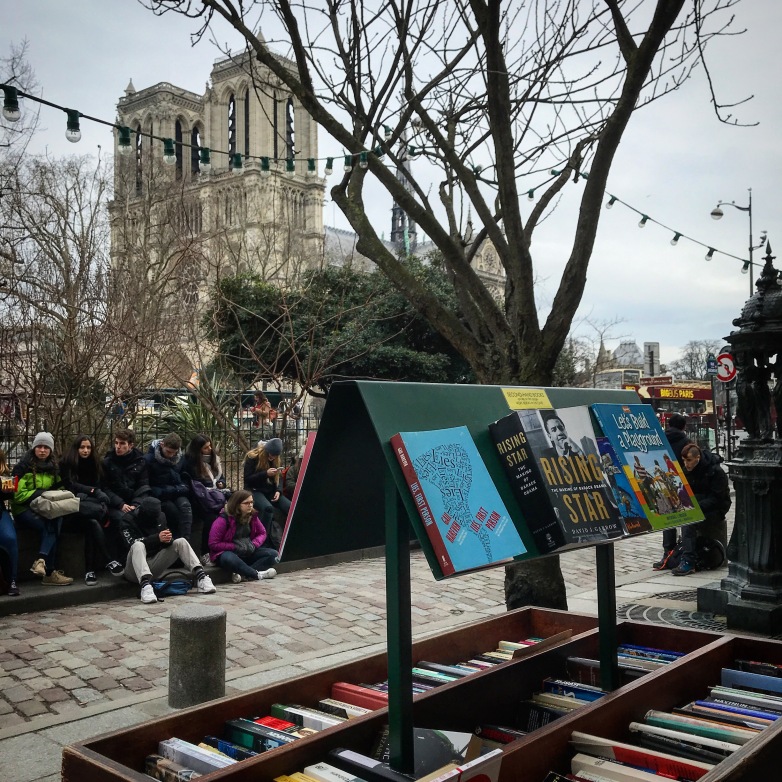
Last summer I went to a Picasso exhibit at the Louisiana Museum north of Copenhagen, next to the sea at Humlebæk. It was mostly his ceramics, and they were charming and I sent photos to my friend who likes when human faces appear on inanimate objects, but I was more interested in the tiny photos of his blue paintings on the timeline of his life pasted to the wall in one of the side rooms. If I had gone to the Picasso Museum when I visited Paris last year instead of spending 45 minutes in line for a galette across the street at Cafe Breizh, I might already have known about his “Blue Period.” In my defense, it was a really good galette, and I had already been through the emotional wringer of walking through Shakespeare & Co. to the sound of some hipster playing The Killers (the default soundtrack for every Las Vegas whose youth was a) misbegotten and b) in the early 2000s) on one of the bookstore pianos and then leaving only to see Notre Dame rising above the Seine through a strand of Edison-bulb Christmas lights, and I think maybe if I’d seen the Blue Period at that juncture I might have had to Javert myself straight off the Pont-Neuf.

Paris, Notre-Dame from outside Shakespeare & Co.
Not pictured: Me, feeling every feeling I’ve ever felt

The Blue Period paintings remind me of when I traveled to New Zealand for business in 2015. I was in a blue period of my own, and for two weeks I went jogging every morning along the Oriental Bay listening to Halsey and Sia. The water was the cerulean blue I only ever saw in crayons as a child, and that Halsey song “Colors” kept looping on my Spotify (“everything is blue, his pills, his hands, his jeans”). It was synchronistic, and poignant, and I felt grateful to have seen cerulean in real life but in utter disarray nonetheless.

Later I was ashamed to have been so sent by the synchrony between a teenager’s pop song and the ocean, which is probably the most pedestrian natural thing you can find to be moved by. I was ashamed again, in Humlebæk, to be ignoring Picasso’s little-seen, avant-garde ceramics so I could wax emotional over something so literal as blue standing in for sadness. And I’m ashamed every time I try and fail to make eye contact with a Basquiat or one of those wacky Pop Surrealist paintings that give me nightmares.

But lately, I’ve felt inclined to treat myself more generously. I feel so anxious to take in all the culture that Europe has to offer while I live here that I trot through museums staring at paintings that make me ill instead of standing like I want to in front of Woman with a Parasol until I will myself into a field in Argenteuil. Reading about Selin and Svetlana reminded me that I can still access the sublime, and that to do so requires giving myself over to it. There’s no point in giving myself over to something that doesn’t move me and no use in trying to be moved by something for the sake of performing sophistication.

I have also wanted lately to put away my camera and to feel sublimity in my bones again, not through a lens, to listen to what my body tells me about beauty rather than to try to measure it in likes. I put on my ballet slippers for the first time in a few years the other week and eased my way through a barre, and I remembered how it felt to be giving beauty back to the world.

I guess we’re all feeling this these days, in our collective awakening to the destructive forces of technology. I don’t think taking photos to satisfy the hunger that beauty evokes in me is any better or worse than naming the colors I see in the desert. It’s all just one means after another of negotiating my place in the world, and I’d argue that even looking at the world through my cracked iPhone lens I’m still better off than this French art thief who tried to cat burgle his way into taming his hunger for the sublime. Though Lord help me the next time I’m in Paris if I’m feeling as delicate as I was the last time. Give me another dose of acoustic piano, Camembert crepes, Gothic cathedrals, and my favorite Crayola crayon color that also reminds me of being 25 and heartsick and I might just have to grab the “Sleepy Drinker” and run.

queen of the road

Ten minutes into my first solo trip as a licensed driver, I got stuck in a parking lot. I had chosen a spot in the corner that was open only because everyone else knew better than to try it, a fact I discovered when I started to back out and realized that there were cars where mine needed to be. I hyperventilated for a couple minutes and then executed a sort of fifteen-point turn while the other suburbanites who needed to visit the Wells Fargo before it closed at five honked at me. The wind, needless to say, was not in my hair.

It was a rude but ultimately apt introduction to the reality of driving. Parking would prove to be my Achilles’ heel. My ‘98 Honda Accord, a hand-me-down from my father, bore the scars of my unusually bad depth perception. The scrape on my driver’s-side door is from the basement garage in my apartment building in Arlington, Virginia, where I lived — along with an army of GW postgrads in salmon shorts — for two years. I retired from driving shortly after I scraped my car against one of the dozens of poles that, I swear to God, popped up in the garage like Whack-a-Mole. You’d be backing your car out, certain of clearance on every side, when BAM! There goes your paint job.

One of the rites of passage at my urban high school was to sneak off campus for lunch. It was the height of glamour to throw out your Port of Subs wrapper as ostentatiously as possible in front of the suckers on the quad eating a peanut butter sandwich that had been flattened under a history textbook since six A.M. I was, as a rule, one of the suckers, except the one time that I let myself be convinced to drive three of us down Charleston and through the drive-thru at Los Tacos, where my classmate splayed herself across my lap to order for us in Spanish. It was seamless — and the tacos were delicious — until we arrived back at campus and realized the fly in the ointment, which was that the only place to surreptitiously re-park your car midday was on the street at the far edge of campus.

I had passed my driving test only because I was the last candidate of the day and my examiner couldn’t be bothered to get out and check my parallel parking job. To be fair, parallel parking isn’t a skill you really need in Las Vegas, land of the warehouse-sized parking lots, unless you’re trying to pull off basically the only bad thing you’ve done in your high school career without side-swiping the choir teacher’s Honda in the process. We finally resorted to a sort of combination airport tarmac/life coach situation where one of my classmates got out and guided me into a spot while the other one sat in the passenger seat and talked me through it. It was only the woeful underfunding of Clark County School District — and its attendant lack of security around our campus — that saved us. But some twelve years later, I still haven’t successfully parallel parked a car.

And of course there was the gouge on the bumper, from a few years after high school ended, when I drove clear to the other side of town because my high school crush invited me over. I was twenty-one, and I knew better, but seventeen-year-old me couldn’t let the opportunity slide. We played a round of Scrabble and fooled around for a while and then I got in my car and made a U-turn that crossed into the path of an automatic gate’s sensor and then there was a terrible scraping noise and there went my bumper. All at once I realized how many mistakes I’d just made, and I whacked my hands on the steering wheel wondering: What kind of automatic gate opens inward? How sad of a sad sack do you have to be to go running clear across town just to prove, years on, that you could have made it with that guy from sixth period chemistry? Why, but why, did we play Scrabble?

I drove all the way from Henderson feeling like an utter fool, back to my parents’ house in Summerlin, where I made up a story about a shopping cart that went astray and swore that I’d take the whole episode to the grave. Since then, that high school crush has unfriended me on Facebook, had a baby, and gotten married — in that order — so the gouge on my bumper will have to do. (I resold the car to a friend who, had I consulted her, would surely have raised one eyebrow high enough that I’d have thought better, hung the keys back up, and stayed home alone on my couch. But then how would seventeen-year-old me have made her peace?)  

It was a relief to give up driving shortly before I moved to New York. I wasn’t very good at it, and I found owning a car stressful. But I had never felt control like I did after I got my driver’s license. I think often about how as a teenager, with adulthood in plain sight, the mountains that surround the Las Vegas valley began to close in on me. Behind the wheel, I felt for the first time that I had the agency to escape them.

That sensation was never keener than when I sat in traffic on my way home from school. On days when I had too much to feel, I liked to take the surface streets home so I could wallow in the belly of the mountains and imagine what it would be like to drive beyond them. The Postal Service was on rotation in my CD player (“I want so badly to believe / That there is truth and love is real”) and for as long as I could sit in traffic I could sit alone with my feelings, with no one there to judge me or mock me or, God forbid, try to comfort me.

Learning to drive was the freest I’d felt — but it wasn’t the first I’d felt free. That came the summer I turned thirteen, the summer I spent palling around with a group of friends who I didn’t jibe with as well as I wanted to. I was still a mouthy little Poindexter who couldn’t keep it together when there was an opportunity to correct someone’s pronunciation or offer up a fact. None of us were cool but the others had figured out chill while I bumbled, stuck on desperate.

It was a humbling summer. But it was the summer that I began to understand what it was to create a life of my own. I ran out the door at ten and the day was mine, all mine, to buy candy with my allowance or spray myself with strawberry-scented glitter in the Bath and Body Works sample aisle or make a fool of myself in front of a boy. I was home again at eight, sure, but it was enough to glimpse what it would be like to live as I pleased.

It was a summer on wheels. The boys rode skateboards, and I was struck recently by a clear memory of me, on a bicycle, grinding up a hill that felt like a mountain, then sailing back down it like I was unstoppable. (A few years later — the years between thirteen and sixteen, which might as well be a lifetime — I was astonished to realize in my car that the “Great Hill” was barely a grade.)

I half wonder if I’ve conjured this memory. It seems impossible now that we could stand gripping our black rubber-coated handlebars under the August sun, like we didn’t need the skin on our palms. And I was hopelessly clumsy, and my body was just beginning to give way to the softness that I would quickly learn to hate. I can picture myself tripping after the other girls in my gang while they rode their Razor scooters up and down the sidewalks. I knew better than to let myself be seen on one of those. (Those colleagues at the software company where I work who are reading this may note that they have never seen me on one of our ubiquitous Razor scooters. To which I say: It’s enough to get you all to take me seriously once you find out I was an English major. We don’t need to complicate things with a head-over-feet-through-a-glass-conference-room-door situation.)  

I can’t imagine myself, at thirteen, on a bicycle. Nor do I have a photo or even much of a memory, but what I do remember is the hill, how daunting it was on two wheels, and then how simple it felt on four. At thirteen, when it was the indignity of begging a ride from my mother or a walk in the hundred-and-ten degree Vegas heat, my bicycle felt like a pair of wings. At sixteen, when the mountains that surrounded the Las Vegas Valley closed in on me like prison walls, the wheel beneath my hands felt like power.

Fast-forward to 2018 and the jarring experience of moving abroad. I felt impotent: Simple tasks like visiting the dentist or buying pants hangers became insurmountable obstacles, and so instead I sat on the couch and wondered if pants hangers would appear in my closet if I wished hard enough. I felt trapped, keenly aware that my residence permit was tied to a job that I vacillated between loving and resenting. I felt, frankly, like a teenager. The world was at my feet but my feet wouldn’t move… until I bought a bicycle.

Buying a bicycle in Copenhagen is like getting a driver’s license in high school. You imagine that you’ll hop on the seat and all the sudden you’ll be willowy and blonde and wearing a maxidress that will flow behind you like a wave while you somehow don’t flash your unglamorous bike shorts at the whole King’s Garden as you pass, and you’ll put flowers in your basket to carry home to your monochrome apartment that isn’t full of dead succulents. I thought, similarly, that once I drove to high school, I’d roll out of my car looking like the girls who flounced down the hall every morning with car keys in one hand and a Frappuccino in the other. I’d know how to tease my hair. I’d pull off smoky eyes. (I have never pulled off smoky eyes.)

So, predictably, there I was on the sidewalk outside the bicycle shop, paddling along like a penguin. The prospect of picking both feet up off the ground and pedaling myself voluntarily into the sea of svelte blondes racing by in their monochrome best was unthinkable. I was flashing back to 1996 and the cul-de-sac where my dad pleaded with me to let him take off the training wheels. To 2005 and the empty parking lot where my dad pleaded with me to pull out into the street. To 2012, the rack of Razor scooters lining the halls of my startup-style office, and the security camera whose operators could be sweet-talked into giving up screenshots of anyone who biffed in front of them.

But what I found when I finally willed myself into the bike lane was a revelation. No, I still can’t tie a scarf around my neck so it will flow behind me in the breeze without it looking like it’s there to keep my head in place, but I can get anywhere. You can reach the hippest places in Copenhagen by bus, sure, if you want to wait for one to show up and then bump along through traffic while the rest of the city sails past på cykel. Or you can climb on your bicycle and sail along with them. In minutes you’re out of the cloying, candy-colored tourist center, laying in the grass outside a converted warehouse with a glass of natural wine in hand, or pulling off your shoes to wade into the sea. I rode up and down the coast and underneath the planes landing at Amager. I clanked along the cobblestones until my teeth rattled. I weaved around tourists and flicked my bell like a truck driver laying on the horn on the highway. I felt that the world was my oyster again.

On wheels I feel like a cyborg. I am myself, but more capable. I can go where I could before but faster, on my own terms, on my own timeline. I am no longer standing shoulder to shoulder with every other twentysomething in Astoria on an N train that stopped halfway to Queensboro Plaza twenty minutes ago, or pondering the physics of air travel in a fiberglass tube that’s hurtling through the sky like a speedboat. I control my own destiny. I’m not carsick or airsick or cursing my mother for setting the cruise control two miles below the speed limit. I’m not stuck behind a tourist taking photos with their iPad. I’m not waiting, perpetually, until the icebergs melt and the mountains erode, for the G train.

At thirteen, at sixteen, and at 29 all I wanted was freedom. A vehicle is not a panacea. I got my driver’s license and I still couldn’t get myself out of a parking lot. I can’t ride my Danish bicycle to Williamsburg to meet my girlfriends for karaoke on Friday night. I could write a letter as lovelorn as this one to the subway, and I could live happily without owning a car again in my lifetime, but it’s the principle of the thing and what it gave me at sixteen when the world was closing in around me. Freedom, to me, is to know that I can get up and go. Wheels are what I need to do it.

 

hej hej to all that

The Italian girls in my Danish class are beside themselves that I’ve left New York. “Jeg kommer fra New York,” I say, hacking up the “fra” like it’s 2003 and I’m in the front row of French I with Madame H________. Better to sound French than to sound American.

“Then why are you here?” asks the girl from Bologna, who twenty minutes into the first class accused me of being a ringer for having shown up already knowing the secret Danish vowels. I suspect we wouldn’t have been friends as children, and that we won’t be friends now, since I’m still the kind of Hermione Granger whose hand shoots up first to show off what I studied before class. (I cringe, because old habits die hard, but it’s not my fault that nobody else thought to look up “how to speak Danish” on YouTube before they showed up today.)

Why am I here? I laugh at this. My New York friends think it’s impossibly exotic that I’ve moved to Europe. I imagine for the Schengen Europeans in my class it’s as humdrum as moving from Los Angeles to New Orleans or Philadelphia to Seattle, enough to trigger some tax mistakes that will be expensive in a decade but not enough to trigger culture shock. Meanwhile, I still don’t know how to pronounce the name of the street I live on. Or schedule a dentist appointment. Or a haircut. Or find travel-size bottles of contact lens solution. Or pants hangers. Or tempeh. Or peanut butter that doesn’t get that weird slick of oil at the top. Or a top sheet. I guess it’s exotic, if your idea of “exotic” is “buying six bottles of travel-size contact lens solution every time you set foot in an American airport.”

During our coffee break, the Italian girls rhapsodize about the machinelike Danish healthcare apparatus. In Italy, they tell me, if you want to see the doctor, you show up at seven A.M. and wait with all the nonnas until the doctor deigns to see you. I shudder. I suppose beyond the miracle of appointment scheduling they find the city drab.

I studied Italian in college, and I imagine Danish must horrify the Italian girls. What I love about Italian is its languor – every consonant gets its due, even when there are two in a row, and syllables are tacked onto words for seemingly no reason other than to make them longer. It’s a full-bodied language with hand gestures to match, so musical that opera seems its natural extension.

Danish, on the other hand, sounds like a cat hacking up a hairball. “Reduction,” the practice of eliding words used in combination, means that several common phrases actually just sound like when you’re trying to talk to the dentist. (“Jeg er amerikaner” – I am American – comes out “Jaaahh amerikaaaaaaahhh.” It’s an apt description of being American in 2018, but undignified nonetheless.)

This doesn’t matter, of course, since every Dane speaks English and probably a few other languages on top of that. In fact, the second lesson in my Danish coursebook teaches languages, nationalities, and numbers through an exercise where you describe the number of languages the book’s characters speak. Marco and Barbara and Helle and King Jones (a real character, who is allegedly from England, and who now works at Novo Nordisk, which feels like subtle Danish commentary on monarchy in the modern era) all of course speak English, but they also speak fransk and spansk and japansk and some of then even speak tysk. I am grateful to have practiced my Danish vowels before I showed up for day one, even if it means that the Italian girls all hate me, because otherwise I might have to slink out in shame on behalf of my people.

In fact, I frequently feel shame on behalf of my people. Every night when I wake up sweating because there are no air conditioners in Northern Europe, I feel shame, and then I roll over and Google “why are there no air conditioners in europe” (answer: because we are one industrializing-nation-gets-access-to-air-conditioning away from The Day After Tomorrow, get a fan, you whiny American piece of shit). Every holiday when I go out to find a coffee shop that will let me pay an exorbitant amount of money for a spoonful of yogurt with two bites of granola and they’re all closed because Europeans like to give everyone a day off, not just people whose parents paid for them to get a useless degree that they parlayed into a 9-5 job only because they know someone who’s four degrees removed from the deep state, I feel shame. Every time I finish my spoonful of yogurt and two bites of granola and start looking around for the bacon, I feel shame. We are fat hedonists who speak no spansk or fransk or dansk, and we are destroying the world with our chlorofluorocarbons. I know that now.

When the Italian girls ask me why I left New York, I want to tell them about the Holland Tunnel, or how walking into my boyfriend’s apartment building meant elbowing through the crowd of tourists lined up for pizza on Bleecker Street. I want to tell them that it’s no longer listening to men complain in little bars near Grand Central, it’s listening to men complain in little cafes in Brooklyn, and it’s not their wives who are unable to cope but their roommates or bandmates or, God forbid, their DJ partners. I want to tell them about how the weekend before I left New York it was below zero and I walked down to the L train platform after midnight, when you might expect to wait twenty minutes for a train, but definitely not THIRTY-FIVE, which is a time I’ve never seen displayed on a transit platform before or since.

It was at that moment that I knew I’d stayed too long at the Fair, or more specifically, at the Alligator Lounge, since maybe if I’d left before midnight I’d have seen an L train again before I perished.

Copenhagen is an exquisite and fantastically functional city. What the Southern Europeans find dismal – the assiduous following of bike lane etiquette, the unforgiving metro doors that are uninterested in letting you hold them open so your slowpoke friends can dive onto the train after you – I find comforting. No, let me be honest; I find it thrilling. I have been telling everyone who will listen that I can get home from the airport in fifteen minutes on a train that runs every six minutes, 24 hours a day. I don’t know how I’ll live with the Holland Tunnel again knowing this exists. Every restaurant takes reservations. The buildings are candy-colored with cupolas the color of the Statue of Liberty on top. I have never elbowed my way into my own home or stepped in someone else’s gum (or, God help me, their vomit). The city sends me email, and you can drink a beer in the park. It’s what I hoped for when we moved: a calmer, more beautiful world, where I can try to enjoy my life instead of ducking my head and battling my way through it.

But.

I feel the loss of America. I miss air conditioning and giant portions, and I also feel like a traitor for leaving America in its time of crisis. We didn’t leave because of the election, though we started talking about leaving because of the election. I would rather have left knowing my country was in the hands of someone capable. (I prefer to leave writing about politics to people with more than an elementary knowledge of politics, but if you really want to hear my feelings, let’s grab a beer someday.) I feel torn between brushing my past as an American off my shoulders and defending my country for its faults. And to be sure, there are many, including but not limited to the election of white nationalists to public office, the Bloomin’ Onion, and Natty Light.

In my six months in Denmark I’ve observed several opportunities for Europeans to take a page out of America’s book. For example, pillows here are terrible. I feel grateful that in addition to most of the condiments from our kitchens, all of my shoes, and an ice cube tray that was probably supposed to stay in his apartment’s freezer, my boyfriend shipped over our American pillows. And don’t get me started on the flies. I’m sure it has something to do with the structure of all these charming double-glazed windows that keep our apartments hyggeligt in the winter, but it seems that the continent has yet to discover that disruptive technology known as the window screen. I woke up last week on a trip to Prague with bug bites on – wait for it – my face. Also, why doesn’t anyone sell travel-size contact lens solution? When I get sick of taking meetings with my California colleagues every night until ten P.M., I’m going to quit and open a store that sells pillows that aren’t terrible and contact lens solution and then I will be a millionaire.

Every week in Danish class, with my classmates who all speak English on top of their native languages and grew up traveling Europe the way I grew up traveling to Kennewick, Washington, I feel like a pasty, precious fish out of water. Why am I leaking sweat onto my plastic chair while everyone else looks like they could sit in this sweatbox of a classroom for another four hours and barely glisten? Why doesn’t anyone else have bug bites on their face? Why are all of our exercises about how everyone in Europe learned to speak German before I even knew how to tie my shoes? Marco speaks five languages. (Marco tale fem sprog.) Well, fuck you, Marco! I have screens on my windows!

I flew home to New York the other week for a wedding. Fifteen minutes out from Newark, just when I’d be stepping off the metro onto the cobbled streets (brosten) for a short walk to my apartment, our Uber inched its way toward the Holland Tunnel. On Canal Street, the honking trucks drowned out the radio and the air conditioner. I looked out at buildings that are grimy with the soot of all these trucks and the cars that we take when the wait for the subway is 35 minutes on a subzero evening in January.

Later, I took the F train into Manhattan to pick up a dress at Rent the Runway and hit CVS for some – you guessed it – travel-size contact lens solution. The platform was dank on a cool, humid summer afternoon, and the train car was too cold. The people around me were too loud, and I glared at them before I turned up the volume on my headphones. Outside, on an avenue that smelled like trash, I walked by the Home Depot and the Lowe’s and the Container Store where you can buy anything you need in any size you can imagine and they’ll bring it to your house for you, walk it up five flights of stairs, take it out of the box so you can put the cardboard in your back alley and wait for it to disappear.

We took an overnight flight back to Copenhagen, and on the way home from the airport the next day I could see buildings that are freshly painted every year and smelled – well, I don’t really know what, but it wasn’t trash. I thought briefly that there was no longer any point in keeping the storage unit I still keep in New York, but three days later I woke up with bug bites on my face. I think it may be some time yet before I stop calling Europe “the Continent.”